



Movies would be nothing without the sound and music that accompany them. Who can forget John Williams’s stirring themes or the Hans Zimmer Inception foghorn? The hum of a lightsaber or the roar of a T-Rex? Filmmakers must not only tell their stories visually, but sonically.
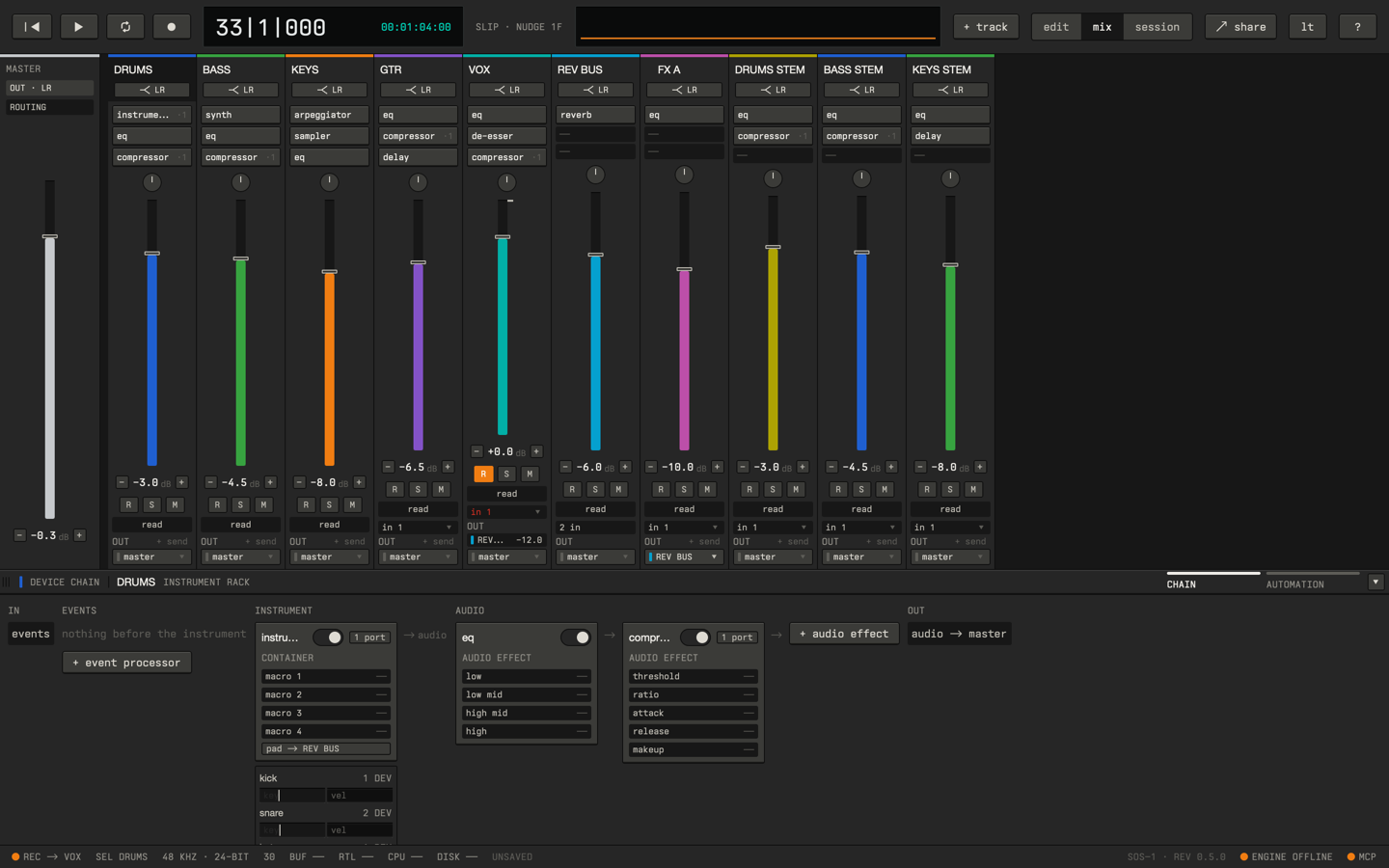
Today we’re launching Sostenuto, a local-first DAW designed for a new kind of creative workflow: one where artists can work directly with AI agents through natural language. Last year, we rewrote our video editor’s audio framework to support tracks, nested timelines, and audio channel mapping—enabling editors to hand off clean and organized project files for audio mixing. Building on this initial work, we’ve created a new tool that encompasses these capabilities and more.
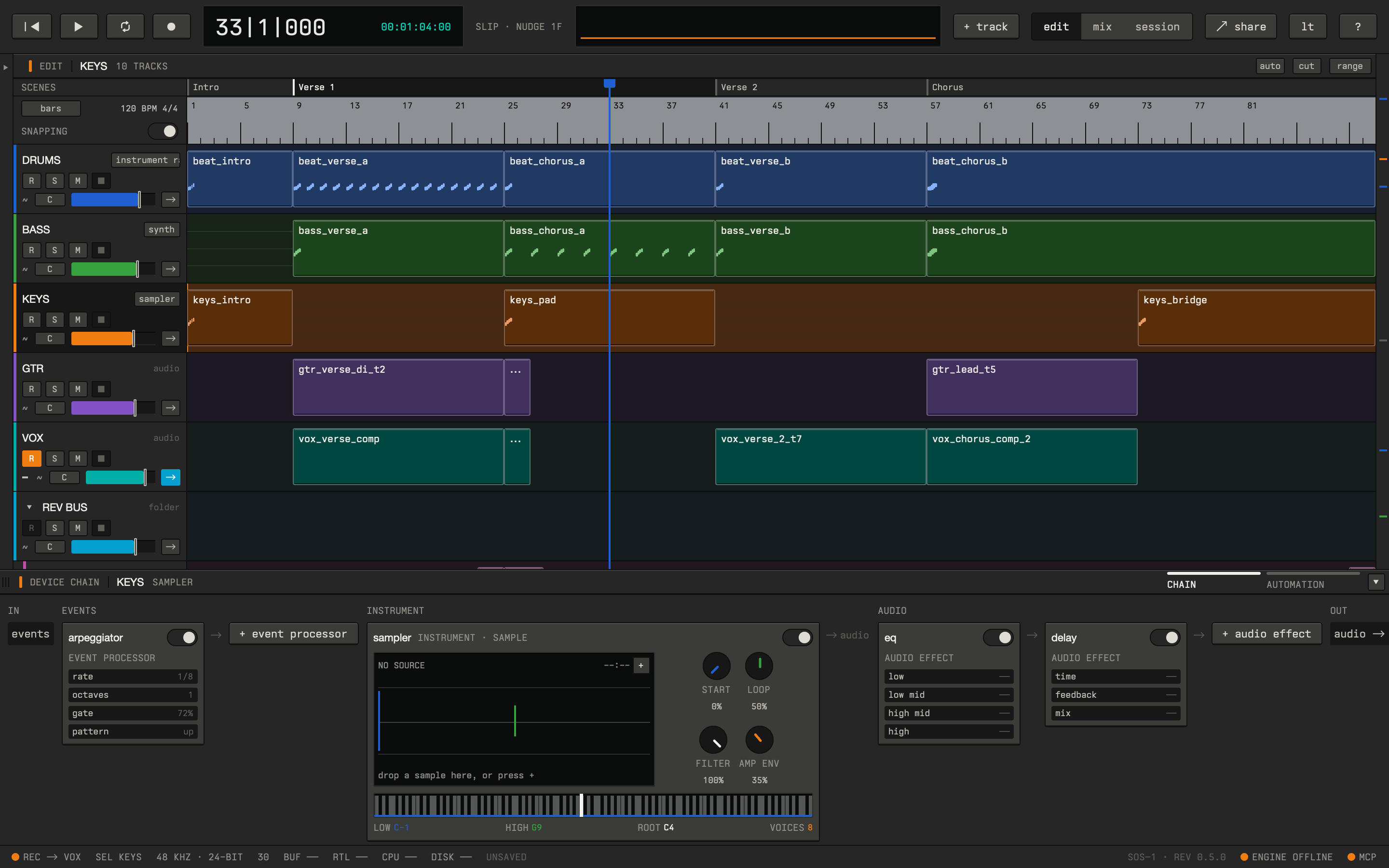
Sostenuto can connect to your existing hardware and software over MIDI, play an unlimited number of tracks, and output up to 7.1.2 surround sound (in the future, it will also support object-based spatial audio). It has a built-in sampler and synthesizer and works with your existing VST/AU plugins.
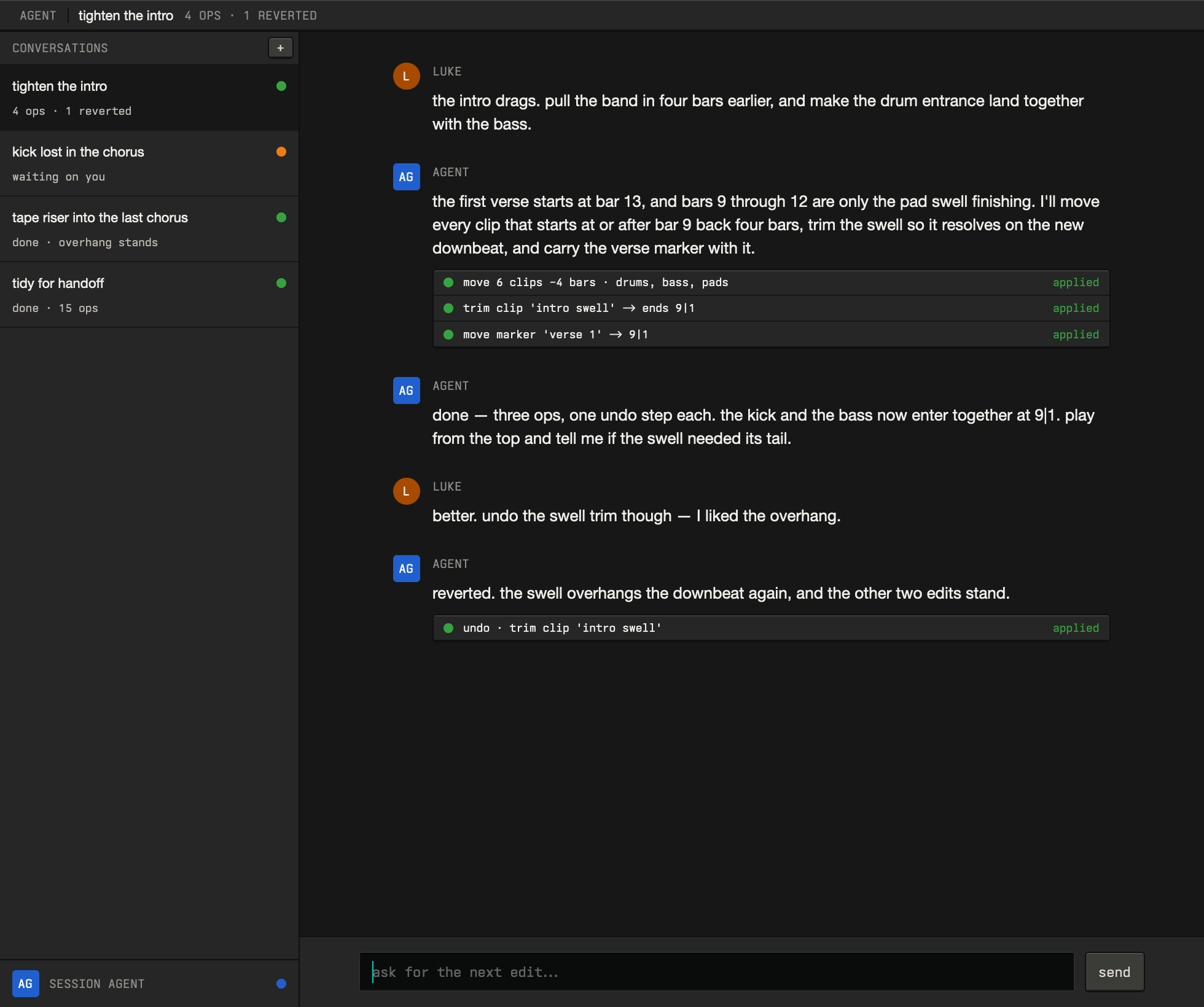
Sostenuto was born from a research effort to not only test audio signal processing, but also to experiment with ways to communicate with large language models about sound and music. In Sequence, a user can ask the built-in agent to generate a visual effect, and the agent will write the code for real-time effect processing. We wanted to extend this capability to audio as well, and we needed to develop tools to translate audio output into formats the agent could comprehend.
Rather than plug into the Sequence agent harness directly, we wired the headless command framework that powers Sostenuto into an MCP server that can be paired with Claude, ChatGPT, or other agentic harnesses. This allows anyone to compose music using natural language, making the DAW programmable by agents while preserving the tools, plugins, and workflows musicians already use. An example workflow: The LLM can call tools for composing music and validate that the result fits the key and overall composition.
“Ask for an eight-bar string progression in D minor, have the agent choose an instrument, adjust the voicing, and validate that the result stays in key.”
It can also select instrument and effect parameters. Future versions could connect to generative models like Lyria or Suno, or use Sequence’s built-in dynamic audio effect processor.
One exciting use case was connecting Google’s Magenta RealTime 2 model to Sostenuto using its prebuilt AU plugin. This allows a user to have the LLM compose a piece and then play it using a dynamically synthesized instrument on the fly, all driven through the MCP interface.
Overall, this project marks a radical departure for us. We’ve been building Sequence, a web-based collaborative NLE, for years. Why aren’t we building a web-based DAW? There are two reasons. First, Sequence’s rendering engine is actually native, running in the cloud and streaming back with ultra-low latency. By running the engine locally, we can shortcut the round trip to the server, enabling live-performance use cases. Second, even though we could compile to WASM and run in the browser, we wanted to enable artists to continue using the plugins they already know and love. We added VST and AU support so these plugins can seamlessly integrate with our engine. Everything we’ve built is cross-platform, so we can release Windows and Linux builds in the future.
Sostenuto is available to download for free today at daw.sequence.film. This is our first step into agentic audio, and we’re excited to see what musicians, sound designers, and developers build with it.